
 Eventos
 Tópicos Recentes
 Fórum
Fórum Classificados
 BoardGameGeek
 RPG Geek
Notícias


Designer Diary: Escape Room In A Box: The Werewolf Experiment
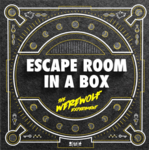 Escape Room In A Box: The Werewolf Experiment is a 60-90 minute cooperative game in which 2-8 players solve puzzles, crack codes, and find hidden clues to thwart a mad scientist's plot to turn them into werewolves.
The Idea
After playing our first escape room, we were instantly hooked. We loved challenging our brains, immersing ourselves in a narrative, and working cooperatively with our team — but of course, we have always loved at-home game nights, too. We wanted to host an "escape room" at home, but at the time, we could find nothing on the market that would allow us to do that. This was truly surprising as we knew there had to be a lot of crossover between the escape room enthusiast community and tabletop gamers.
Neither of us had ever designed a game before (unless you count "BOOM!", an economics lesson in the guise of a [terrible] game that Juliana made in sixth grade), but we were both incredibly passionate about escape rooms and tabletop games, so we decided to try our hand at combining the two. We had both worked as writers in the film and television industry previously and were eager to bring that sense of narrative and drama to a game.
The game had to have a werewolf theme because we first met playing the game Werewolf, and it is still one of our all-time faves. Plus, we needed a narrative that didn't involve the players physically being locked in a room, but that would instead focus on unlocking something. Being poisoned by a mad scientist who has the antidote locked away made perfect sense.
The Development
We set about figuring out how to shove all our favorite things from an escape room into a box. We wanted a wide variety of puzzles that would let different people shine at different moments and include unexpected reveals, fun surprises, and physical interactions.
We wrote down a list of every sort of puzzle we had ever encountered in an escape room as well as ones we just thought would be fun. This was the start of our "puzzle compendium", which we are still adding to today. (It now has hundreds of ideas.) We then went through to pick out which puzzles would fit in the box, serve the theme, and (most importantly) be fun! As much as possible, we strived to have puzzles that would lead to an "A-ha!" moment, that glorious second when the solution clicks in and you solve the puzzle, rather than tasks that you have to plow through to get the answer.
We get frustrated very quickly when we encounter bottlenecks in escape rooms. Everyone standing around watching one person solve something is less than fun, so when we were creating our map for how the game would flow, we made sure that there would always be multiple things that need solving throughout the game. The game starts with a number of puzzles, and as you work through them, you unlock gates that give you access to more puzzles. This generally keeps a good flow to the game where it's not an overwhelming amount of information but there is still enough for everyone to feel involved.
Additionally, we wanted each puzzle's answer to be used at least once if not more in the form of meta puzzles. This would ensure that only groups who had correctly solved the initial puzzles could move on.
After we had mapped out and written everything, we set about creating a prototype. The first one was an Amazon box with papers glued on top. Ariel is proficient in Photoshop, so she created the early designs while Juliana focused on sourcing and costing out the various elements. Ariel's husband even got involved, drilling holes into the tins in his metal shop, literally bleeding for our work!
Playtesting
This game was truly made in playtesting. Our first group to go through took over two hours, even with generous hints along the way. It was WAY too hard! Over the course of playtesting, we watched carefully and worked hard to take out anything that was overly frustrating. We asked ourselves, "When do people stop having fun, and how can we fix that?" Of the hundreds of groups that we have seen, no two groups solve the box in the same way and we continue to be surprised, so we had to learn which problems were outliers and which ones affected the majority of groups.
Additionally, we learned hard lessons like "people don't read". If you just tell them something, they will likely ignore it. If, however, you cue them into it with design and repetition, they are more likely to pay attention. Simple things like having the border on all the puzzle papers match and be distinct from the border on the answer sheet made a big difference.
We tweaked puzzles endlessly, added puzzles, and killed puzzles we adored. (We learned the hard way that us loving a certain kind of puzzle does not mean everyone else loves it, too.) Because of the interwoven nature of the design and the meta-puzzles, making one small change would often reverberate throughout multiple portions of the game, so there was a lot of redesigning.
Massive playtesting also helped us eliminate leaps of logic. Just because something made sense to us and felt well clued, we had to eliminate or change it if it was not making sense to the majority of players.
Kickstarter
Preparing for and running a Kickstarter is a job unto itself. We did crazy amounts of research — the blogs of Jamey Stegmaier and James Mathe were particularly enlightening — and work before and during the campaign.
Once we came to a point where our playtesters were consistently having an awesome time with the game, we sent it out into the world for reviews. We reached out to reviewers two months before launching so that they would have plenty of time to play and produce a review that could post on day one of our campaign. As first-time creators, we knew we would need the stamp of approval from known personalities in order for our project to succeed. While we'd heard that 3-4 reviews would be sufficient, we ultimately ended up getting sixteen and are grateful for all the audience that brought to our page.
We also focused a ton of attention on PR. We had a budget of $0 for marketing the game, so ads were out of the question. Reaching out to any outlet we could think of that might cover an escape room or a tabletop game, we made sure to personalize every single inquiry and specify exactly why their audience would be excited to learn about our game.
All of our hard work truly paid off when our Kickstarter funded in just fourteen hours. Ultimately, we raised over $135,000 with more than two thousand backers. We had clearly found an idea whose time had come.
Licensing
After the Kickstarter, we took numerous meetings with toy and game companies. We received several offers and ultimately signed with Mattel. Their games team is so smart, passionate, and all-around awesome that we couldn't be happier to have found a home there — and having manufactured the first three thousand boxes independently, we also couldn't be more thrilled to have them take over so that we can get back to our favorite thing: designing more escape room games!
Ariel Rubin and Juliana Patel
Categorias: Notícias
Crowdfunding Round-up: Rush for Apocalyptic Battle in a Living Unicorn Museum After D-Day
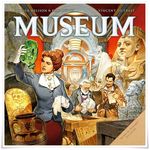 • Holy Grail Games has been showing Eric Dubus and Olivier Melison's Museum at conventions since at least Gen Con 2016, and now the game is on Kickstarter to collect your dollars so that you can then collect relics from four civilizations. You can spend those relics to fuel other expeditions or add them to your museum based on whatever categories of history you're trying to represent.
Vincent Dutrait's artwork is one of the highlights of this game, with him depicting 180 objects you can collect and more than three hundred illustrations overall. (KS link)
• To look at the other side of the collecting coin, you can check out Museum Rush from Rhys ap Gwyn and Room 17 Games, with you being a thief who's trying to loot the most valuable stuff from a museum while misdirecting guards at your fellow thieves. (KS link)
• Kill the Unicorns from Cyril Besnard, Loïc Chorvot, Alain Fondrille, and Morning is another title that I first saw at Gen Con 2016, with BGG even recording an overview video of the game at that show, a video that no longer seems representative of the game to be. Such is the convention life sometimes. Now you and 2-5 other players bid blindly to capture unicorns (and avoid the pigicorn) in order to clear the kingdom of their pesky, gassy selves. (KS link)
• In Babis Giannios' Galactic Warlords: Battle for Dominion from Archona Games, you get to be one of the warlords in question, with you hiring mercenaries and deploying defense systems to take control of different parts of the galaxy. (KS link)
• In Christophe Boelinger's Living Planet from Lumberjacks Studio, 2-4 players arrive on a new world and set out to exploit it, but the planet will respond with cataclysms based on what you do. (KS link)
• You can screw up a world in an entirely different way in Human Era from Jake Given, Zach Given, and Lay Waste Games, with 4-10 players aboard the last
existing time machine and tasked with repairing the disintegrating space-time continuum — unless you're a machine, of course, as then you're delighted at the idea of humanity being gone and having the entire universe to yourself. Cyborgs, being half-human and half-machine, tend to play on both sides of the net as they have their own goals to achieve. (KS link)
• Mike Gnade of Rock Manor Games debuted the steampunk deck-building game Brass Empire at Gen Con 2016, and now he's trying to fund the Brass Empire: New Canton expansion for release in late 2018, an expansion that includes legacy-style (yet non-desetructive) hero decks that let you evolve the hero over the course of a huge 12-hour campaign. (KS link)
• You can also find the steampunk aesthetic throughout the card game Gearworks by Kirk Dennison and PieceKeeper Games, which features the standard steampunkian goal of you assembling parts into a working machine. (KS link)
• Ragnar Brothers has returned to Kickstarter for a second go at Darien Apocalypse, a cooperative game from the usual team of Dicken, Kendall and Kendall in which you attempt to hold off the four Horsemen of the Apocalypse on four alternative worlds. If you don't want to share the glory of being savior of humanity, you can instead play competitively. (KS link)
• Raentikgames describes Andoria Battlefields from Wisam El-Rachid and Al Vice as a drafting, area-control, dice-combat-based battle-race game in which players represent both heroes and monsters and use those two forces to fight against those of the opponents. (KS link)
• You also get to play both sides of a battle in The Convergents from Jonny Hinkle, Billy Miller, and IION Games in which two players use super-powered heroes and villains to square off against one another. (KS link)
• Emmanuel Aquin's D-Day Dice, which fell into a hole when original publisher Valley Games vanished and stopped supporting it, will be released in a second edition courtesy of Word Forge Games, with tens of stretch goals and expansions already achieved or available for purchase as part of the KS campaign. (KS link)
• Want to back a Korean-only game from Gary Kim and Yeon-Min Jung? You can back 우리사이느은: The Card Game only through November 29, 2017, so hop to it, then submit a listing to the BGG database once it arrives in your mailbox so that we can all find out what it's like. (Tumblbug link)
Editor's note: Please don't post links to other Kickstarter projects in the comments section. Write to me via the email address in the header, and I'll consider them for inclusion in a future crowdfunding round-up. Thanks! —WEM
Categorias: Notícias
- « primeira
- ‹ anterior
- 1
- 2
- 3
- 4
- 5
- 6
- 7
- 8
- 9
- …
- seguinte ›
- última »